
Radiography Testing (RT)
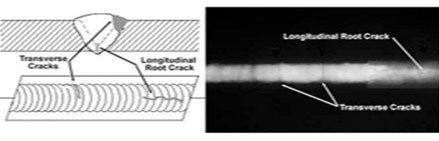
Radiographic examination is based on photon irradiation from an X-ray machine or a radioactive source (Ir-192, Co-60, or, in rare situations, Cs-137).
Because variations in the quantity (or intensity) of radiation entering from the opposite side of the material may be detected and quantified, variations in this amount (or intensity) of radiation are used to assess material thickness or composition. Penetrating radiations are those with wavelengths shorter than around 10 nanometers in the electromagnetic spectrum. Differential Absorption is the underlying premise of Industrial Radiography Testing. This means that various materials absorb varied amounts of radiation depending on thickness, density, and the presence of defects.
Films comprising radiation sensitive silver halide crystals, such as silver bromide or silver chloride, with a flexible, transparent, blue-tinted base are commonly used as detection medium. Some Br- ions are released and trapped by the Ag+ ions when x-rays, gamma rays, or light impact the grains of the sensitive silver halide in the emulsion. This change is so minor that it cannot be detected using conventional physical means and is referred to as a “latent (hidden) image.” When exposed grains are exposed to a chemical solution (developer), they become more sensitive to the reduction process, resulting in the creation of black, metallic silver. The picture is created by the silver suspended in the gelatin on both sides of the base.
Radiographic testing produces a permanent record in the form of a radiograph and a very sensitive picture of the material’s interior structure.
RT APPLICATIONS INCLUDE
- Castings & Forgings
- Boiler internal & external inspections
- Pistons, gears, bolts etc.,
- Machined parts
- Plastic and glass
- Weld seams
- Precision machined parts
- Welder certification
X-RAY SOURCES
An X-ray machine with high energy can be employed. It is frequently necessary to utilize a high accelerating voltage to provide electrons with extremely high energy. This is because the maximal photon energy in a braking radiation source is determined by the energy of the charged particles.

RADIOISOTOPE SOURCES
These have the benefit of not requiring an electrical source to work, but they have the disadvantage of being unable to be shut off. Furthermore, harnessing radioactivity to generate a tiny and compact source that gives the photon flux attainable with a standard sealed X-ray tube is problematic.
In astrophysical processes, gamma rays are created by subatomic particle interactions such as electron positron annihilation, radioactive decay, fusion, fission, or inverse Compton Scattering.

INTERNAL X-RAY RADIOGRAPHY
The X-Ray Crawler works similarly to traditional radiography, except that an x-ray source tube on a crawler device is run within the pipe to each weld. The welds are wrapped in film, and the source tube is turned on. The film is then processed on location in a mobile darkroom. The approach is rapid and can check 150 welds every day on average. The speed and low exposure duration of x-ray crawlers are benefits. When compared to traditional radiography employing Iridium type sources, the film is also clearer and significantly less grainy.
APPLICATIONS
- Capable of inspecting pipes ranging from 5 1/2″ diameter to 72″ diameter
- Designed for onshore and offshore applications
- Functions in remote areas with rugged terrain
- Works in extreme temperatures
- CRAWLER FEATURES:
- Traction unit on crawlers built to navigate inclines up to 45″
- Crawlers fitted with anti-runaway circuitry and retrieval systems
- Cycle times minimized to meet high production rate
- Modular crawler design for maximum versatility

EXTERNAL X-RAY RADIOGRAPHY

APPLICATIONS
By this we can perform SWSI and DWSI
GAMMA RAY RADIOGRAPHY
Gamma radiography operates similarly to x-rays. However, instead of a huge x-ray generating machine, a little pellet of radioactive material encased in a titanium capsule is required to create effective gamma rays.
Because isotopes are easily transported, gamma radiography is highly helpful in distant places where it may be used to inspect pipelines carrying gas or oil for faults in welds. The use of gamma radiography has the benefit of requiring no electricity, which eliminates the requirement for x-ray systems, which require power to function and may not be easily accessible at a distant site.

